
How to Measure a Room for Furniture: 7 Proven Ways
Choosing new furniture is exciting, it can also be very frustrating to purchase a piece that doesn’t fit in your room. From the comfort of the sofa, the chic coffee table or the new queen bed frame, the key to a beautiful and functional home begins with the right measurements.
Anyone who has ever wondered how to measure a room for furniture is in the right place! This course is designed to help you understand how to measure a room in plain English and has seven effective techniques that you can use to measure your room with confidence. Follow these tips and you won’t make expensive mistakes, make the right decisions, and make sure that every piece fit perfectly.
Why Measuring your Room Before Buying Furniture Matters?
Many homeowners buy furniture based on appearance alone. Unfortunately, even beautiful furniture can become a problem if it is too large or too small for the available space.
Learning how to measure room for furniture helps you:
- Avoid buying furniture that won’t fit through doors or hallways.
- Create enough walking space around each piece.
- Save money by avoiding returns and exchanges.
- Make your room look balanced and organized.
- Choose furniture that matches your lifestyle and available space.
Whether you’re purchasing furniture online or visiting a showroom like West Elm Furniture, accurate measurements give you confidence before placing an order.
Tools You’ll Need to Measure a Room for Furniture
Before you start measuring, gather a few simple tools.
Essential Measuring Tools
- Tape measure (at least 25 feet)
- Notebook or measuring worksheet
- Pencil
- Smartphone calculator
- Graph paper (optional)
- Painter’s tape
- Laser measuring tool (optional)
Having these tools ready makes measuring faster and helps you avoid mistakes.
Step 1: Measure the Length and Width of the Room
The first and most important step in learning how to measure room for furniture is measuring the overall size of your room.
How to Do It
- Place the tape measure against one wall.
- Measure to the opposite wall.
- Record the measurement.
- Repeat the process for the width.
For example:
- Length: 18 feet
- Width: 14 feet
Write every measurement down immediately. Even a small mistake can affect your furniture layout later.
Pro Tip
Measure each wall separately.
Some homes have walls that are not perfectly straight, especially in older buildings.
Many people forget this important step.
Step 2: Measure Doors, Windows, and Entryways
A sofa, king bed frame, or dining table may fit inside your room—but can it get through the front door?
Always measure:
- Entry doors
- Bedroom doors
- Hallways
- Staircases
- Elevators (for apartments)
Also record:
- Window locations
- Window height
- Window width
These measurements help prevent expensive delivery problems.
Step 3: Mark Permanent Features Inside the Room
Not every part of a room is available for furniture.
Measure and mark permanent features like:
- Closets
- Fireplaces
- Built-in shelves
- Radiators
- Air vents
- Electrical outlets
- Light switches
If you’re planning to place furniture near these features, you’ll want to leave enough clearance for easy access.
For example, placing a large modern coffee table directly in front of a floor vent can block airflow and reduce heating or cooling efficiency.
1. Create a Simple Floor Plan
After measuring the room, draw a basic floor plan.
Don’t worry—it doesn’t have to be perfect.
A simple rectangle with measurements works well.
Include:
- Room dimensions
- Doors
- Windows
- Electrical outlets
- Built-in furniture
This sketch gives you a bird’s-eye view of the space and helps you plan where each furniture piece will go.
If you’re buying from West Elm Furniture, compare the furniture dimensions listed on the product page with your floor plan before making a purchase.
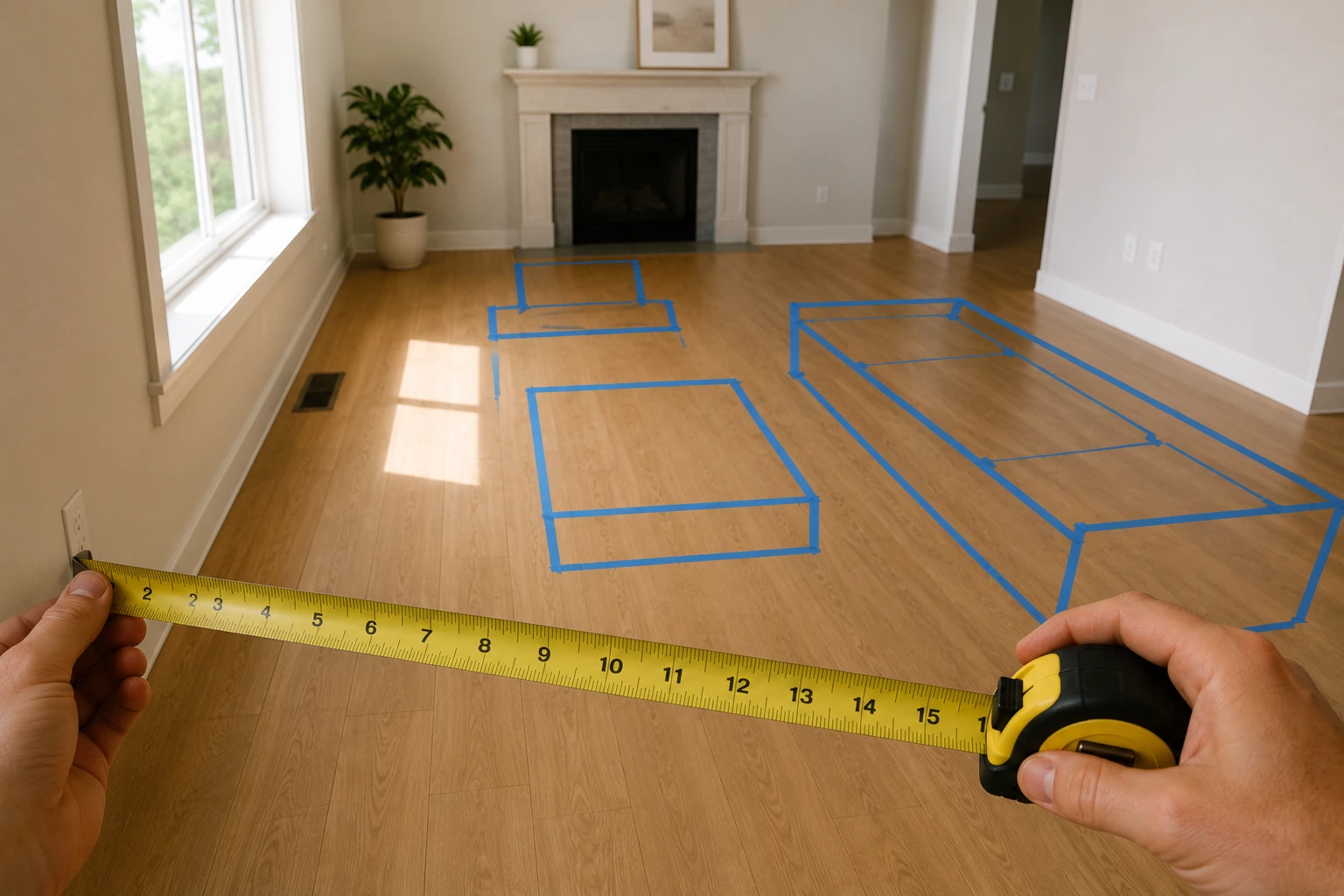
2. Use Painter’s Tape to Outline Furniture
One of the easiest ways to visualize furniture placement is by using painter’s tape.
Measure the furniture dimensions and mark them directly on the floor.
For example, if you’re considering a:
- Sofa
- Round coffee table
- Entertainment unit
use painter’s tape to create the exact outline on the floor.
Walk around the taped area.
Ask yourself:
- Is there enough walking space?
- Does the furniture block doors?
- Does the room still feel open?
This simple trick helps you avoid buying furniture that overwhelms your room.
3. Leave Enough Walking Space
Many people focus only on whether furniture fits inside a room.
Instead, think about how people move through space.
Interior designers recommend leaving enough room to walk comfortably around furniture.
Here are some general guidelines:
| Area | Recommended Space |
| Walkways | 30–36 inches |
| Between sofa and coffee table | 16–18 inches |
| Around dining chairs | 36 inches |
| Around beds | 24–30 inches |
For example, if you’re buying a coffee table with storage, remember that drawers or lift-top mechanisms require additional space to open fully.
Likewise, if you’re placing a round coffee table, make sure there’s enough room for people to walk around it without bumping into the edges.
These small details make your room feel more comfortable and functional.
Measuring Different Living Room Furniture
Living rooms often contain several large furniture pieces, so measuring carefully is essential.
Coffee Table
A coffee table should be proportional to your sofa.
General guidelines:
- Length should be about two-thirds of the sofa.
- Height should be close to the sofa seat height.
- Leave 16–18 inches between the sofa and the table.
Round Coffee Table
A round coffee table works especially well in:
- Small living rooms
- Homes with children
- Compact seating arrangements
Its rounded edges improve traffic flow and reduce the risk of bumps in tight spaces.
Coffee Table with Storage
A coffee table with storage is ideal for keeping blankets, remotes, board games, and magazines out of sight.
When measuring, be sure to allow extra room for drawers, shelves, or lift-top lids to open without obstruction.
Modern Coffee Table
A modern coffee table often features sleek lines and unique shapes. Because these designs can vary significantly, always check the product dimensions rather than estimating by appearance.
You should also consider any decorative items, such as coffee table books, candles, or trays. While they don’t affect the table’s size, leaving enough surrounding space ensures the room doesn’t feel cluttered.
4. Measure Your Bedroom Before Buying a Bed Frame
Your bedroom should be a place where you can relax and move around comfortably. Since the bed is usually the largest piece of furniture in the room, measuring the space before buying is very important.
When learning how to measure room for furniture, start by measuring the room’s length and width. Then, note the location of doors, windows, closets, and electrical outlets. These details will help you decide the best position for your bed.
After measuring the room, think about how much walking space you want around the bed. A crowded bedroom can feel uncomfortable, while a well-planned layout makes the room look bigger and more inviting.
Choose the Right Bed Frame for Your Room
Every bed frame has different dimensions, so selecting the right size depends on your room.
Here are the most common options:
- Twin bed frame: Ideal for children’s bedrooms, guest rooms, or small apartments.
- Full bed frame: A good option for single adults who need a little more sleeping space.
- Queen bed frame: One of the most popular choices because it fits comfortably in most master bedrooms.
- King bed frame or king size bed frame: Perfect for spacious bedrooms where comfort is the top priority.
- Metal bed frame: A durable and modern option that works well in both small and large bedrooms.
Before placing your order, compare the product dimensions with your room measurements instead of relying only on the bed size name.
5. Measure Your Dining Space Before Buying a Table
A dining table should bring people together without making the room feel crowded.
Before shopping, measure your dining area carefully. Remember that you need space not only for the table but also for the chairs. People should be able to pull out their chairs and move around the table comfortably.
Many homeowners only measure the table itself and forget about the extra space needed for everyday use.
Find the Best Dining Table for Your Home
The right table depends on your room size and family needs.
Some popular choices include:
- Round dining table: Great for smaller rooms because it improves movement and has no sharp corners.
- Dining table set for 4: Perfect for apartments or small families.
- Dining table set for 6: A better choice for larger households or people who often entertain guests.
- Extendable dining table: Offers flexibility by expanding when extra seating is needed.
After measuring your room, imagine everyone sitting around the table. There should still be enough space to walk behind the chairs without feeling cramped.
6. Measure Clearance Around Furniture
One of the biggest mistakes homeowners make is measuring only the furniture.
Furniture also needs extra space to function properly.
For example, drawers need room to open, cabinet doors should swing freely, and reclining chairs require additional clearance behind them.
The same rule applies to living room furniture.
A coffee table with storage may have drawers or a lift-top surface that needs extra space to open. If you don’t plan for this, using the table can become inconvenient.
Likewise, a modern coffee table with an unusual design may take up more visual and physical space than expected.
When measuring, think about how you’ll use the furniture every day, not just where you’ll place it.
Measure Your Coffee Table the Right Way
A coffee table is often the centerpiece of the living room, so choosing the correct size is essential.
It should complement your sofa without making the room feel crowded.
Keep these simple tips in mind:
- Leave about 16–18 inches between the sofa and the coffee table.
- Choose a table that’s roughly two-thirds the length of your sofa.
- Make sure there’s enough room to walk around it comfortably.
If you’re considering a round coffee table, its curved edges make it a great option for smaller spaces and homes with children.
A coffee table with storage is perfect for keeping remotes, magazines, blankets, and other everyday items organized.
Many homeowners also decorate with coffee table books to add style and personality. Just avoid overcrowding the tabletop so it remains practical and visually appealing.
7. Test the Furniture Layout Before Buying
One of the easiest ways to avoid buying furniture that doesn’t fit is to test the layout before making a purchase.
You don’t need expensive design software.
Simply use painter’s tape to outline the size of your furniture on the floor. You can also use cardboard boxes or newspapers to represent larger pieces.
Walk around the room and imagine your daily routine.
Ask yourself:
- Can you walk comfortably through the room?
- Do doors and drawers open fully?
- Is there enough space around each furniture piece?
- Does the room still feel open and inviting?
If the answer is yes, you’re ready to buy with confidence.
This simple step can save you from expensive returns and help you create a room that feels balanced and functional.
Shopping Smart with West Elm Furniture
Many homeowners choose West Elm Furniture because of its stylish designs and quality craftsmanship. However, beautiful furniture should also fit your room perfectly.
Before ordering from West Elm, compare the furniture dimensions with your room measurements.
Pay close attention to:
- Overall width and depth
- Height of the furniture
- Assembly space
- Doorway and hallway clearance
Taking a few extra minutes to measure can help you avoid delivery issues and ensure your new furniture fits exactly where you want it.
Apply These Measuring Tips to Laundry Room Ideas
These same measuring techniques are useful when planning Laundry Room Ideas.
Laundry rooms are often compact, so every inch of space matters. Before adding cabinets, shelves, or folding stations, measure the available floor space carefully.
Make sure there’s enough room to:
- Open the washer and dryer doors completely.
- Pull out laundry baskets comfortably.
- Reach storage shelves without obstruction.
- Move around the room without feeling cramped.
A well-measured laundry room is easier to organize and makes everyday chores much more convenient.
Common Mistakes to Avoid When Measuring a Room for Furniture
Even after measuring your room, a few simple mistakes can lead to buying furniture that doesn’t fit. Taking a little extra time to double-check your measurements can save money and prevent unnecessary frustration.
One common mistake is measuring only the empty floor space. Many people forget to include windows, doors, radiators, built-in shelves, or electrical outlets. These features can affect where furniture can actually be placed.
Another mistake is ignoring the delivery path. A sofa or king size bed frame may fit perfectly inside the room but still be too large to pass through the front door, hallway, or staircase.
Many homeowners also forget to leave enough space for movement. Furniture should fit comfortably without making the room feel crowded. Always think about how you will use the space every day.
Here are a few mistakes to avoid:
- Guessing measurements instead of using a tape measure.
- Forgetting to measure doorways and hallways.
- Buying oversized furniture for a small room.
- Ignoring space needed for drawers and cabinet doors.
- Not testing the furniture layout before buying.
Avoiding these common errors will help you create a room that looks attractive and functions well.
Expert Tips for Measuring Furniture Like a Pro
Professional interior designers follow a few simple habits that help them create balanced and comfortable spaces.
First, always measure twice before placing an order. A small measuring error can make a big difference when buying large furniture.
Second, keep a written record of all your room measurements. You can save them on your phone or in a notebook so they are always available while shopping.
Third, compare your room measurements with the exact dimensions listed by the furniture manufacturer. Never assume that two products with the same name are the same size.
Finally, think about your future needs. If you plan to move furniture around or add new pieces later, leave enough open space to make those changes easier.
Quick Furniture Measuring Checklist
Before you buy any furniture, go through this simple checklist.
- Measure the room length and width.
- Measure doors, hallways, and staircases.
- Mark the location of windows and electrical outlets.
- Leave enough walking space around furniture.
- Test the layout using painter’s tape.
- Compare your measurements with the furniture dimensions.
Following these steps will help you buy furniture with confidence and reduce the chances of making expensive mistakes.
Conclusion
Learning how to measure room for furniture is one of the easiest ways to create a comfortable and well-designed home. Whether you’re buying a stylish coffee table, a durable bed frame, a spacious dining table set, or planning new Laundry Room Ideas, accurate measurements make every purchase a smarter investment.
Remember that measuring is about more than finding enough floor space. You also need to consider walking areas, furniture clearance, doors, windows, and how the room will be used every day.
If you’re shopping from retailers like West Elm Furniture, always compare your room measurements with the product specifications before placing an order. A few minutes of planning can help you avoid returns, save money, and enjoy furniture that fits your home perfectly.
By following these 7 proven ways, you’ll be able to choose furniture with confidence and design a space that is both beautiful and functional.
Frequently Asked Questions (FAQs)
1. How do I measure a room for furniture?
Start by measuring the room’s length and width with a tape measure. Then measure doors, windows, and any permanent fixtures. Finally, compare these measurements with the furniture dimensions before buying.
2. How much walking space should I leave around furniture?
Most interior designers recommend leaving 24 to 36 inches of walking space around large furniture whenever possible. This keeps the room comfortable and easy to navigate.
3. What size coffee table should I choose?
A coffee table should usually be about two-thirds the length of your sofa. Leave around 16 to 18 inches between the sofa and the table for comfortable access.
4. Is a round coffee table better for small rooms?
Yes. A round coffee table is often a better choice for smaller living rooms because it has no sharp corners and allows smoother movement around the seating area.
5. How do I choose the right bed frame size?
Measure your bedroom first and consider how much walking space you want around the bed. A queen bed frame fits most master bedrooms, while a king bed frame requires a larger room.
6. What is the advantage of a coffee table with storage?
A coffee table with storage helps keep your living room organized by providing space for blankets, remotes, magazines, and other everyday items without taking up extra floor space.
7. How much space do I need for a dining table?
Leave enough room so chairs can be pulled out comfortably. An extendable dining table is a great option if you need extra seating for guests but want to save space every day.
8. Should I measure doorways before buying furniture?
Yes. Always measure doorways, hallways, staircases, and elevators before ordering large furniture to make sure it can be delivered into your home.
9. Does West Elm Furniture provide product dimensions?
Yes. West Elm Furniture includes detailed product measurements on its website, making it easier to compare furniture sizes with your room dimensions before purchasing.
10. Can these measuring tips help with laundry room planning?
Absolutely. These same techniques work well for Laundry Room Ideas, helping you plan cabinets, shelves, countertops, and appliances while maintaining enough space for comfortable movement.
Final Thoughts
Measuring your room may take only a few minutes, but it can save you from costly mistakes and unnecessary stress. Whether you’re furnishing a single room or your entire home, careful planning ensures every piece fits perfectly and complements your lifestyle. By measuring first and shopping second, you’ll create a home that is both stylish and practical. Looking for more practical home decorating advice? Visit prohomedecorhub.com for expert home decor ideas, furniture buying guides, room makeover inspiration, and DIY decorating tips to help you create a stylish and comfortable home.